
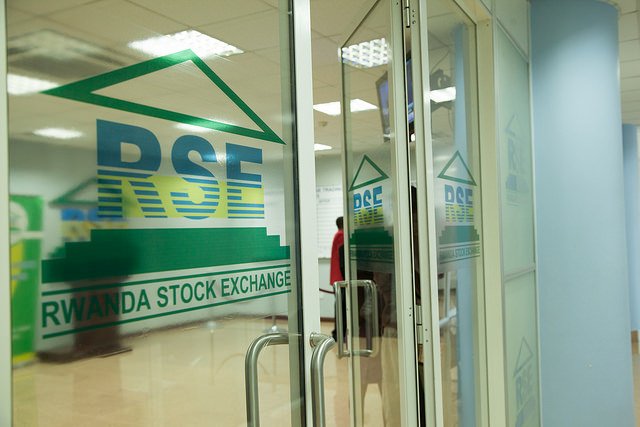
The Rwanda Stock Exchange (RSE) this week officially launched a new Multicurrency Denominated Securities Market Segment (MDS), a move that allows issuers and investors to issue and trade securities in currencies beyond the Rwandan franc for the first time.
Announced during the 28th African Securities Exchanges Association Annual Conference (ASEA 2025) held in Kigali from November 27–28, the innovation marks a significant shift in the country’s capital market structure, underlining Rwanda’s ambition to become a more globally competitive financial centre.
According to RSE Chief Executive Officer (and ASEA President) Pierre‑Célestin Rwabukumba, the multicurrency market will allow “local and foreign issuers to list bonds and other securities in a range of currencies,” notably enabling Rwandans in the diaspora and foreign investors to participate in forex-denominated securities.
The MDS aims to open Rwanda’s capital markets to a broader global investor base, addressing what has long been a structural limitation: until now, RSE only supported securities denominated in Rwandan francs.
With Rwanda’s current negative balance of payments, driven by import-heavy infrastructure and construction needs, the ability to raise and trade in “hard” foreign currencies such as US dollars is expected to ease access to foreign capital and reduce pressure on the local currency.
RSE officials believe the segment will improve financing flexibility for businesses, especially those earning in foreign currencies, such as exporters and companies relying on imports as well as create new opportunities for diaspora investors seeking to channel remittances into productive, long-term assets.
The launch of the MDS is part of a broader expansion of Rwanda’s capital market infrastructure. Earlier in 2025, RSE introduced a dedicated Green Exchange Window (GEW) for green, social, and sustainability-linked securities aligned with growing global demand for ESG-compliant investment instruments.
This diversification comes after a record-setting 2024, when turnover on the exchange surpassed Rwf 129 billion more than double the prior year, driven by increased bond issuance, including green bonds and sustainability-linked debt.
Despite this growth, RSE has previously faced challenges: limited product variety, low secondary-market liquidity, and a narrow investor base dominated by domestic participants.
The multicurrency market is seen as a potential catalyst to address these structural constraints.
For foreign investors and Rwandans in the diaspora, the ability to invest in US dollars or other hard currencies significantly reduces currency-exchange risk and enhances the attractiveness of Rwanda’s securities, bringing the market closer to international standards.
At the same time, local firms and import-dependent businesses stand to benefit from direct access to foreign-currency financing through the exchange, lowering their reliance on bank borrowing and supporting long-term capital mobilization for large projects such as infrastructure and energy.
Regionally, the new Multicurrency Denominated Securities Market Segment (MDS) strengthens integration efforts by complementing the African Exchanges Linkage Project (AELP), which aims to harmonize trading systems and facilitate smoother cross-border investment across the continent.
For sustainable and impact-focused investors, Rwanda’s move to pair the multicurrency segment with its Green Exchange Window positions the country as an emerging hub for diversified, forward-looking capital-market products that blend hard-currency financing with ESG-aligned instruments.
According to RSE leadership, the segment will be accessible primarily to qualified investors, diaspora participants, and businesses earning in foreign currency, a measure intended to mitigate misuse and currency-speculation risks.
Moreover, deepening liquidity, especially in secondary markets, remains a major challenge. Local investors have historically preferred buy-and-hold strategies, and the introduction of new currency-based instruments must be matched by efficient trading mechanisms and active participation from institutional investors.
Do you have any story or press releases you want to share? Send tips to editor@envestreetfinancial.com
Follow us on Twitter, Facebook, or LinkedIn to ensure you don’t miss out on any