
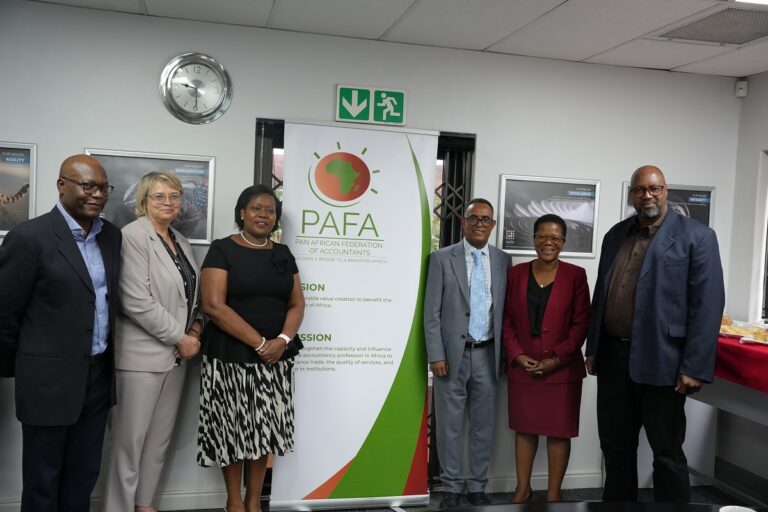
The African Development Bank (AfDB) and the Pan African Federation of Accountants (PAFA) have launched a $5.2 million institutional support initiative aimed at tackling a chronic shortage of qualified public-sector accountants and auditors across Africa.
The new programme, officially unveiled on 26 November at the headquarters of the South African Institute of Professional Accountants (SAIPA) in Johannesburg, is designed to harmonize accounting standards, strengthen professional institutions, and build capacity for transparent public financial management in more than 20 countries.
According to the press release, many African states face “a severe shortage of qualified public-sector accountants and auditors.”
Without sufficient qualified professionals, governments risk weak financial discipline raising the potential for inefficiency, poor budgeting, misreported accounts, or misuse of public funds. The initiative aims to remedy this by equipping states with trained, certified financial professionals.
The funding, disbursed through the AfDB’s Transition Support Facility, will support the programme over multiple years.
The initiative will work through national professional accountancy organizations (PAOs) under PAFA’s umbrella, leveraging existing local institutions rather than creating parallel structures.
The new project, named the “Strengthening the Pan African Federation of Accountants and PFM Resilience in Africa” programme outlines several key objectives:
Harmonize accounting standards, tools, and practices across participating African countries, ensuring comparability and portability of credentials.
Build institutional and professional capacity for PAOs to deliver high-quality financial reporting in public-sector organizations.
Strengthen public-sector accounting and auditing capacity to enhance transparency, accountability and fiscal governance.
Promote gender equality by boosting women’s participation in accountancy and public sector financial management through targeted mentorship and training.
One emphasized goal is to support financial health and service delivery across the continent: as AfDB’s Kennedy Mbekeani, Director General, Southern Africa Regional Development and Business Delivery Office, noted, “Strong, transparent public financial management is essential for resilient economies and improved services for citizens.”
The AfDB selected PAFA as the implementing partner due to its unique continental footprint: the federation comprises 57 professional accountancy organizations from 47 African countries.
By engaging national PAOs, the initiative aims to strengthen locally rooted institutions rather than impose external systems, a model that helps ensure sustainability, local relevance, and broad buy-in.
PAFA describes its mission as promoting “a strong, independent and unified accountancy profession in Africa operating under internationally recognized standards.”
The new programme is also aligned with the broader objectives of the African Professionalization Initiative (API), which seeks to build capacity for public-sector financial professionals across the continent.
Beyond improving public-sector accounting in individual countries, the initiative has broader regional and continental implications. One of the aims is to standardize professional qualifications and improve skills mobility across borders, a key milestone for realizing the potential of the African Continental Free Trade Area (AfCFTA).
Harmonized credentials and accounting standards will facilitate recognition of African financial professionals across jurisdictions, promoting cross-country career mobility, enabling regional cooperation, and strengthening investor confidence in financial reporting and public-sector finance.
Moreover, strengthened public financial management, characterized by transparent accounting, reliable auditing, and qualified oversight can enhance trust in public institutions, help prevent misuse of resources, and improve delivery of public services, all of which are crucial for sustainable development and effective governance across Africa.
According to PAFA, sustainable development of the accountancy profession requires more than individual training.
It demands strong, credible and institutionally sound professional accountancy organizations (PAOs) within each country, underpinned by good governance, ethical standards and financial viability.
The AfDB–PAFA programme thus represents a significant investment in institutional architecture, foundational to lasting improvements in public-sector financial management across African states.
The initiative also includes efforts to promote ethical behavior, enhance professional credibility and embed good governance values, efforts critical for boosting cross-border recognition of African accountancy qualifications and for anchoring public trust in financial institutions and government spending.
PAFA’s CEO, Alta Prinsloo, described the initiative as “a decisive step towards strengthening Africa’s public financial management landscape.”
She emphasized that by investing in the professionalization of accountants and auditors, the programme is “building the skills, institutions, and standards that enable transparency, trust, and effective governance.”
Do you have any story or press releases you want to share? Send tips to editor@envestreetfinancial.com
Follow us on Twitter, Facebook, or LinkedIn to ensure you don’t miss out on any