
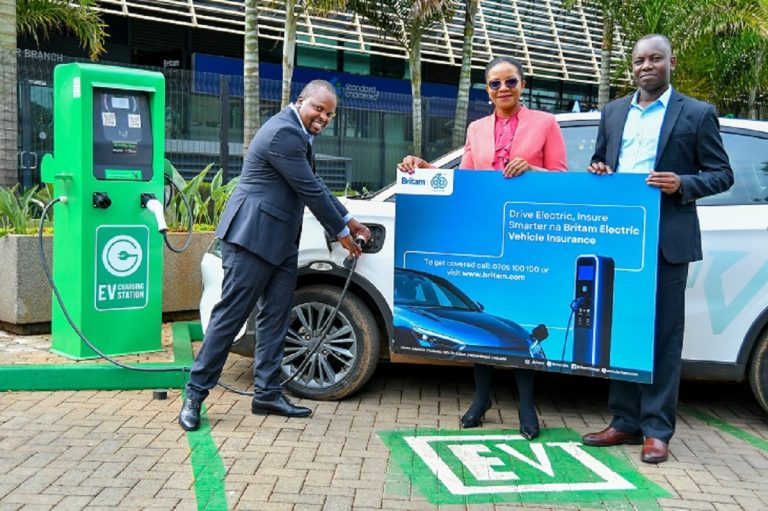
As Kenya’s electric mobility industry takes shape, Britam General Insurance has launched a specialized insurance product for electric vehicles (EVs) a move set to bolster the country’s shift toward clean transport, while providing much-needed security for owners amid a rapidly growing market.
Britam’s new offering, tailored for fully electric cars, hybrid models, and privately used electric motorcycles, makes it one of the first insurers in the region to address the unique risks associated with EV ownership. The comprehensive package includes a Battery Protect Cover Extension, safeguarding the electric motor and battery, the most expensive EV components along with cover for personal charging equipment and even an out-of-charge recovery service to tow stranded EVs to the nearest charging station.
This move arrives against a backdrop of explosive growth in Kenya’s EV market. Vehicle registrations surged from 2,694 units in 2023 to 5,294 in 2024 and had already reached 9,047 by May 2025 marking a remarkable 150% increase year-on-year. Electric motorcycles account for nearly 90% of the EV fleet, with 7.1% of new motorcycle registrations in 2024 being electric almost twice the 3.6% recorded in 2023.
“This EV Insurance cover shows how Britam innovates to meet evolving customer needs while supporting sustainable transport. By providing tailored EV insurance, we are contributing to a low-carbon future while helping the market scale responsibly,” said James Mbithi, CEO and Principal Officer, Britam General Insurance.
The policy still includes the standard motor-insurance benefits of accidental damage, theft, fire, flooding, political violence, terrorism, and access to courtesy vehicles, road rescue, and excess protection. Flexibly structured premiums available as flexible lump-sum or monthly instalments ensure affordability.
Among the standout features of the Electric vehicle insurance is charger insurance, reflecting the fact that most owners power their cars at home rather than at petrol stations. With domestic charging equipment becoming an essential part of modern households, insurers are adapting to cover damage, theft, or malfunction.
Electric cars are becoming more popular in Kenya because the government is offering tax breaks and incentives, charging stations are improving, and there is a push for cleaner transport. Common models include the Nissan Leaf, Hyundai Kona Electric, and Neta V, with options ranging from affordable to luxury. Although public charging stations are increasing, most people charge their cars at home or at work.
Electric vehicles differ fundamentally from petrol or diesel cars. Repairs require advanced technical expertise, with only a limited number of specialized garages and mechanics certified to handle high-voltage systems. The new policy addresses this gap by ensuring access to qualified repairers and recognizing the higher cost of skilled EV labour.
Servicing requirements are also markedly different between electric and combustion-engine cars. Conventional vehicles demand oil changes, spark plugs, and filters every 5,000 kilometers, with costs running between ksh8,000 and ksh10,000 annually for regular service. By contrast, EVs require far less maintenance: the first service typically occurs at around 25,000 kilometers, often involving only brake pad checks rather than replacements.
Britam’s commitment to sustainability extends beyond the product. At its Nairobi headquarters, the firm has already installed three EV charging stations, each with six ports, beneath a solar-powered carport supported by 183 panels.
Kenya’s power grid further complements the shift to e-mobility: over 90% of the nation’s electricity is generated from renewable sources like geothermal, wind, and hydro. This green energy mix makes EV charging notably cleaner than in regions that rely heavily on fossil-fueled electricity.
The government has also taken steps to stimulate EV adoption, including reducing excise duty on EV imports to 10%, offering VAT exemptions, and proposing preferential tariffs for charging infrastructure.
Kenya must continue expanding charging infrastructure, improve technical service capacity, and grow local vehicle assembly capabilities. Nevertheless, the country now ranks seventh in Africa for EV adoption, with electric buses and boda-boda conversions already in pilot stages.
Do you have any story or press releases you want to share? Send tips to editor@envestreetfinancial.com
Follow us on Twitter, Facebook, or LinkedIn to ensure you don’t miss out on any