
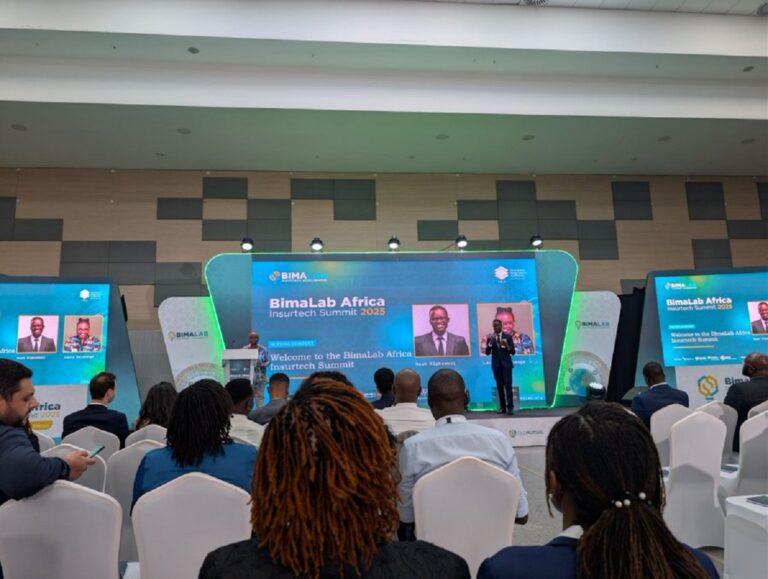
FSD Africa has announced a new $30 million Inclusive Insurtech Investment Fund, marking one of the most significant commitments yet to expanding insurance access and accelerating insurance innovation in Africa.
The announcement was made at the BimaLab Africa Insurtech Summit 2025, held in Nairobi on 26–27 November, where regulators, investors and innovators convened to explore new models for closing Africa’s vast protection gap.
Africa remains one of the world’s least insured regions, with insurance penetration averaging below 3% in most countries. This gap leaves millions of households, small businesses, and vulnerable communities exposed to climate shocks, health emergencies and natural disasters.
According to FSD Africa, around 80% of economic losses from natural disasters in 2022 were uninsured, up from 58% the previous year, exacerbating the financial strain on some of the continent’s most fragile economies.
The new fund, known as the Inclusive Insurtech Investment Fund (3IF), is designed to change that trajectory. Managed by FSD Africa Investments (FSDAi), it aims to support early-stage startups building technology-driven solutions that can expand insurance access to low-income populations.
The initiative brings together funding from Swiss Re Foundation, USAID, Belgian Investment Company for Developing Countries (BIO), and other partners.
Kevin Massingham, Director of Risk, Resilience and Climate at FSD Africa, described the fund as a turning point for the sector. “Africa’s protection gap is widening,” he said. “To reverse this, we need investment in new insurance models that reach underserved communities and support resilience. 3IF is a critical vehicle for strengthening insurance innovation in Africa.”
The Summit also featured the launch of the new Regulatory Sandbox Eligibility Assessment Toolkit, a framework intended to help regulators evaluate emerging insurtech solutions.
Developed by FSD Africa and the Insurance Regulatory Authority of Kenya, the toolkit is expected to streamline how regulators assess digital insurance products, paving the way for safer and faster market entry.
Godfrey Kiptum, CEO and Commissioner of Kenya’s Insurance Regulatory Authority, welcomed the development, noting that regulatory readiness is central to building the continent’s insurance future.
“By strengthening the regulatory environment, we are laying the foundation for a more inclusive ecosystem for Africa’s next decade,” he said. “This toolkit will be invaluable not only for Kenya, but for regulators across Africa.”
Since its establishment in 2020, the BimaLab Insurtech Accelerator Programme has emerged as one of Africa’s leading platforms for nurturing insurance startups. The programme has supported more than 135 startups in 28 countries, helping create over 150 insurance solutions that now serve more than 6 million customers.
It has also collaborated with regulators in 15 countries to develop seven insurance sandboxes, controlled environments where innovations can be tested.
Elias Omondi, Principal of Innovation for Resilience at FSD Africa, said the challenge is not simply a market gap but a capacity and capital gap. “Our approach is to provide catalytic funding that allows startups to test, scale and deliver inclusive insurance products,” he said. “The goal is to reach the millions who remain unprotected.”
One of the companies demonstrating the potential of insurtech is Turaco, a Kenyan micro-insurance firm featured at the Summit. The company’s CEO and Co-founder, Ted Pantone, highlighted how early support from BimaLab enabled their expansion across the region.
“When we launched in 2019, our vision was to insure one billion people across the continent,” he said. “With BimaLab’s support, we’ve extended operations to Uganda, Nigeria and Ghana, and we’re now serving more than a million customers and processing over 20,000 claims. This programme really works.”
The fund is expected to attract further investment into African insurance markets by supporting technologies that lower costs, simplify distribution and integrate climate-resilient protection. These include mobile-based insurance, AI-driven risk modelling and digital platforms tailored for informal sector workers, smallholder farmers and low-income households.
BimaLab’s annual summits have evolved into one of the continent’s most influential convening spaces for insurance innovation, policy reform and investment. The alumni network formed through the programme continues to drive market development, attracting global partners interested in Africa’s emerging insurtech landscape.
By strengthening regulatory frameworks, developing new investment pipelines and supporting startup growth, FSD Africa says it is focused on building a resilient and inclusive future. As the insurance sector confronts rapid technological change and deep-rooted access gaps, programmes like BimaLab and funds like 3IF could be central to reshaping the industry.
Do you have any story or press releases you want to share? Send tips to editor@envestreetfinancial.com
Follow us on Twitter, Facebook, or LinkedIn to ensure you don’t miss out on any