
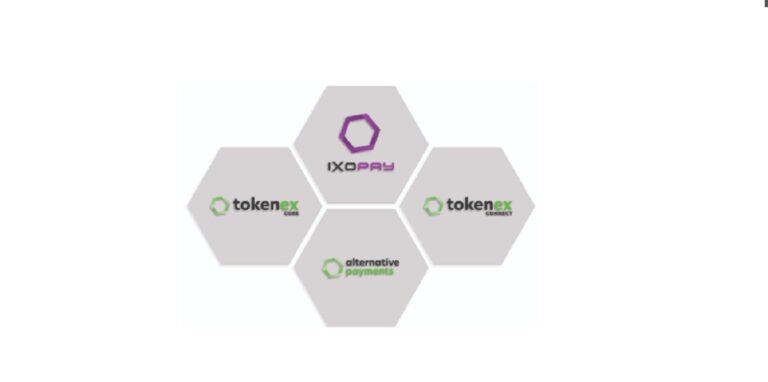
Payment infrastructure provider IXOPAY has launched a suite of payment tokenization solutions aimed at redefining how merchants secure and scale transactions across markets, processors and payment methods.
The new offerings, collectively branded as TokenEx packages, are designed to position tokenization at the core of modern payment strategies, providing merchants with enhanced data security, flexibility, and independence from processor-specific constraints.
The initiative reflects growing demand for more robust, scalable and future-proof payment architectures as commerce rapidly digitalizes and decentralizes.
Tokenization, the process of replacing sensitive data with encrypted placeholders or “tokens,” has long been used primarily as a security measure in payments.
Rather than storing actual card details or bank information, merchants store tokens that represent this data, reducing the risk of breaches and liability.
However, IXOPAY executives say tokenization must evolve beyond a reactive security feature into a proactive architectural foundation for next-generation commerce.
In a statement, IXOPAY’s interim Chief Executive, Suzanne Rudnitzki, emphasized that the new packages give merchants “clarity and confidence from day one,” enabling them to build payment infrastructures that are adaptable to future technological shifts, including artificial intelligence-driven commerce.
IXOPAY’s release outlines three new TokenEx packages, each tailored to distinct stages of a merchant’s payment journey:
1. TokenEx Core:
This entry-level offering establishes a token-first foundation, combining Universal Tokens, enabling portability and flexibility across processors with Network Tokens, which optimize recurring and card-on-file payments.
The result is increased operational agility and decreased dependence on individual payments processors. Storing token values instead of raw card data also reduces a merchant’s compliance obligations under PCI-DSS (Payment Card Industry Data Security Standard).
2. TokenEx Connect:
Built on the Core package, Connect adds pre-configured integrations to over 20 payment service providers, allowing businesses to scale rapidly without costly and complex custom integrations.
This positions merchants to adopt multi-processor strategies more readily, enhancing resilience and geographic reach while maintaining data ownership.
3. Alternative Payments:
This package broadens acceptance to include popular local and alternative payment options such as PayPal, Venmo, Skrill and Buy Now, Pay Later services like Klarna.
By enabling diverse customer preferences out-of-the-box, IXOPAY aims to boost conversion rates and customer experience without adding infrastructural complexity.
According to the company, these solutions are pre-configured and purpose-built to reduce operational overhead, accelerate time to value, and remove barriers that often constrain merchants as they grow.
Apart from the TokenEx packages, IXOPAY also announced expanded global payment connectivity through support for PIX, Brazil’s real-time instant payment platform.
Introduced in 2020, PIX has rapidly become a dominant payment rail in the country, with adoption by over 90 % of the adult population and processing billions of transactions monthly.
By integrating PIX via partnerships such as with fintech dLocal, IXOPAY enables merchants to enter or expand in the Brazilian market more efficiently without bespoke local integrations.
Such global connectivity enhancements are becoming essential as commerce shifts across borders and consumers increasingly demand localised payment experiences.
Support for systems like PIX underscores the need for payment infrastructures that are both globally comprehensive and locally responsive.
IXOPAY positions its strategy within the framework of “agentic commerce,” a term referring broadly to ecosystems where autonomous technologies such as AI agents help initiate, manage and complete transactions on behalf of consumers and businesses.
In this context, tokenization is seen not merely as a defensive tool but as an enabler of intelligent, adaptable payment flows suitable for emerging digital landscapes.
The company’s platform already connects to more than 200 payment service providers and supports over 300 payment methods globally, according to its own statements.
This breadth of connectivity aims to future-proof merchant infrastructure, allowing them to pivot swiftly as payment preferences, technologies and regulatory regimes evolve.
IXOPAY is pushing the wider industry toward more modular, interoperable payment systems. This could benefit merchants by reducing vendor lock-in, improving data ownership, and lowering operational barriers as they expand their digital payment capabilities.
Do you have any story or press releases you want to share? Send tips to editor@envestreetfinancial.com
Follow us on Twitter, Facebook, or LinkedIn to ensure you don’t miss out on any