
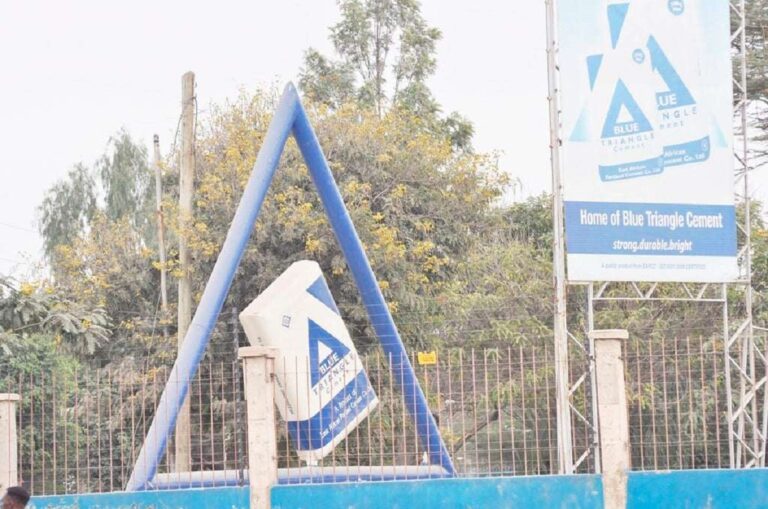
Kalahari Cement, a subsidiary of the pan-African industrial conglomerate Amsons Group, has committed US$200 million to modernize and expand the operations of East African Portland Cement Plc (EAPC).
The revitalization plan marks a critical juncture for EAPC, one of the country’s oldest cement manufacturers, and aligns with the government’s broader ambitions to strengthen local manufacturing and support infrastructure development under its 10-year national development roadmap.
Under the investment blueprint, Kalahari Cement intends to upgrade EAPC’s ageing production facilities, significantly boosting cement manufacturing capacity from about 1.3 million tonnes per annum (Mtpa) to nearly 4 Mtpa over the next three years.
The restructuring includes installation of new energy-efficient grinding and clinkerisation plants, essential units in cement production, and the engagement of a leading global engineering, procurement, and construction (EPC) contractor to design the turnkey solution.
Amsons Group Managing Director, Edha Nahdi, highlighted the strategic importance of the investment, saying the capital injection secures the first phase of a broader modernization agenda.
“Plans to invest more than US$200 million in the first phase of the modernization agenda have been secured,” Nahdi said during a tour of the EAPC Integrated Manufacturing plant in Kitengela, Kajiado County.
The modernization pledge follows Kalahari Cement’s successful acquisition of a majority equity stake in EAPC. The locally incorporated investor, backed by Tanzania’s Amsons Group, holds approximately 69% controlling interest in the company, a status achieved through successive share purchases from institutional investors over the past year.
Earlier transactions saw Kalahari Cement secure significant minority stakes from international shareholders, including Associated International Cement Limited and Cementia Holding AG, consolidating its influence within EAPC’s boardroom and operations.
The infusion of capital and strategic direction could help reverse years of stagnation at EAPC, which has traditionally struggled with dilapidated infrastructure, constrained production, and declining market share amid stiff competition from regional and multinational players.
Kenya’s cement sector has seen rising demand in recent years, reflecting broader activity in infrastructure projects and real estate.
According to the Kenya National Bureau of Statistics (KNBS), domestic cement production reached 9.5 million metric tonnes in the first eleven months of 2025, up from 8.1 million tonnes in the same period a year earlier.
Consumption also grew to 9.3 million tonnes, from 7.8 million tonnes in 2024.
These figures underscore increasing domestic demand for construction materials, driven by public and private investments in roads, railways, ports, housing, and industrial facilities. The government’s infrastructure development agenda remains a key catalyst for growth.
The move could reduce Kenya’s reliance on imported cement, while creating jobs and strengthening domestic supply chains. With increased capacity and modern manufacturing technology, EAPC is expected to capture a larger share of the market and better serve both local and regional construction demand.
Beyond production upgrades, Kalahari Cement’s plan includes staff welfare enhancements, reflecting the investor’s commitment to a “shared prosperity model.”
Workers at the Kitengela plant, many of whom have faced uncertainty due to EAPC’s underperformance in recent years, welcomed the investment for the job security and improved working conditions it promises.
“Amsons is a family-owned business with a rich heritage, and we commit to prioritizing staff welfare initiatives to secure the lives of EAPC staffers, their families, and other stakeholders,” Nahdi said.
Do you have any story or press releases you want to share? Send tips to editor@envestreetfinancial.com
Follow us on Twitter, Facebook, or LinkedIn to ensure you don’t miss out on any