
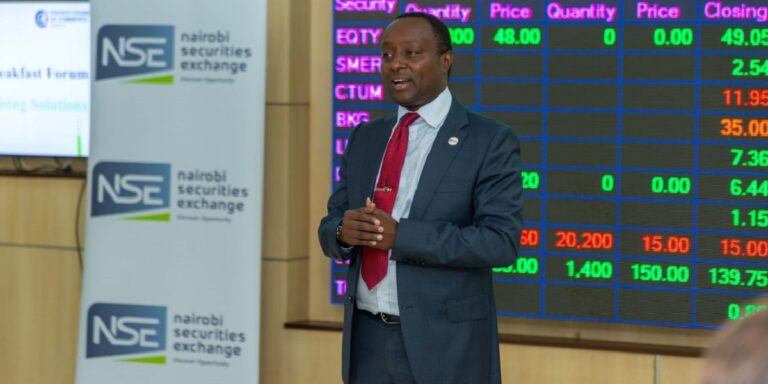
The Nairobi Securities Exchange (NSE) has been elevated from “Restricted” to “Pass” status by FTSE Russell, a key arbiter of global investment markets. The upgrade, confirmed in the September 2025 interim review, specifically recognises the NSE’s implementation of a more efficient trading mechanism.
The critical reform that spurred this change was the shift to allowing trading in multiples of a single share, a system that came into effect on 1 August. This replaces the previous requirement for larger, fixed board lot sizes, which often posed a barrier to smaller investors.
Frank Mwiti, Chief Executive of the NSE, described the upgrade as a “powerful endorsement” of the exchange’s modernisation drive. “It reflects our unwavering commitment to democratising investment, boosting liquidity and positioning Kenya as a globally competitive investment hub,” he stated.
The FTSE Russell classification system is a globally recognised benchmark used by the world’s largest institutional investors; from pension funds in London to asset managers in New York, to decide where to allocate billions of dollars. A “Restricted” classification often signals operational or regulatory hurdles that can deter investment, while a “Pass” indicates a market meets international standards.
This upgrade is significant because it places Kenya firmly on the radar of these global asset allocators. Funds that track FTSE Russell’s flagship indexes, or use them as a performance benchmark, may now be compelled to consider Kenyan equities for the first time, or increase their existing holdings.
“This is more than a technicality; it’s a signal,” said Wanjiku Mwangi, a senior investment analyst at a Nairobi-based firm. “For years, we’ve spoken about the potential of the Kenyan market. This move by FTSE Russell is an independent, third-party validation that our market is maturing and aligning with global best practices. It tells the world that Kenya is open for business in a more structured and accessible way.”
The most immediate domestic impact of the change is the ability for retail investors to buy and sell shares in single units. Previously, an investor might have needed to purchase, for example, 100 shares of a company at once, representing a significant capital outlay for a small-scale saver.
Now, with the ability to trade in single-share multiples, participation becomes far more accessible.
“This is a game-changer for the mwananchi [common citizen],” explained David Ochieng, who runs a popular financial literacy blog in Kenya. “A young person just starting their career can now buy one share of Safaricom with their spare cash, rather than saving for a larger block. It truly democratises the stock market and encourages a culture of saving and investment from the ground up.”
The NSE, which is a member of the World Federation of Exchanges and a partner in the UN’s Sustainable Stock Exchanges Initiative, has long championed this reform agenda. The successful implementation of the single-share trading system was the final piece of the puzzle needed to satisfy FTSE Russell’s “Efficient Trading Mechanism” criterion.
The long-term implications are profound. Greater foreign institutional investment can provide a stable source of capital for Kenyan companies, fuelling expansion and economic growth. It also strengthens the Kenyan shilling by increasing foreign exchange inflows.
Do you have any story or press releases you want to share? Send tips to editor@envestreetfinancial.com
Follow us on Twitter, Facebook, or LinkedIn to ensure you don’t miss out on any