
The Private Infrastructure Development Group (PIDG), a global development finance institution, has confirmed a strategic anchor investment in Kenya’s first industrial Real Estate Investment Trust (REIT), signaling a new phase of institutional investment in the country’s commercial property sector.
The move is expected to broaden access to capital and establish Kenya as a frontier for industrial real estate finance in East Africa.
Under terms approved by Kenya’s Capital Markets Authority (CMA), PIDG has committed up to USD 15 million through its project development arm, InfraCo, to the ALP Industrial Real Estate Investment Trust (ALP REIT), spearheaded by Africa Logistics Properties Holdings Ltd (ALPH).
The financial backing positions PIDG as a principal investor contingent on customary conditions and the successful completion of ALP REIT’s ongoing capital raise.
The ALP REIT, the first industrial income REIT (I-REIT) in East Africa, marks a departure from the region’s previous use of REIT mechanisms, largely focused on residential or office property, to now embrace industrial and logistics assets.
The structure’s tax-efficient characteristics are designed to appeal to long-term institutional investors by balancing predictable income streams with exposure to real assets.
REITs allow investors to pool capital for ownership in diversified property portfolios, typically with regular income distributions supported by rental revenues.
The establishment of an industrial REIT in Kenya is aimed at tapping previously under-utilized pools of capital, including pension funds, insurance companies and mutual funds, by offering a regulated, transparent vehicle for infrastructure-linked assets.
“We know that providing investors with stable, USD-denominated returns increases confidence to diversify portfolios into infrastructure asset classes,” said Raghav Gandhi, Chief Executive Officer of Africa Logistics Properties Holdings.
He added that the ALP REIT is expected to bolster confidence among institutional investors while supporting the burgeoning industrial real estate sector.
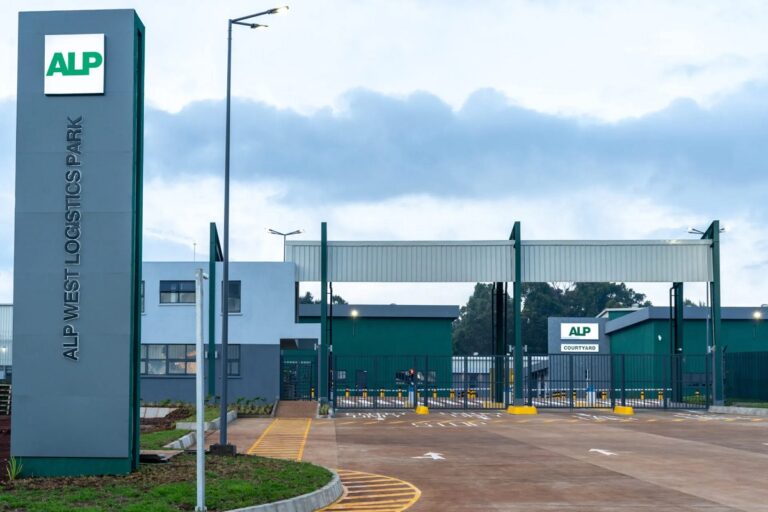
Modern logistics facilities form the core of the ALP REIT’s initial portfolio. Funds raised will be used to finance ALP’s existing industrial parks, including 35,000 square metres of warehousing at ALP North Park in Tatu City and 20,000 square metres at ALP West Park in Tilisi.
Additional facilities will be transferred into the trust once stabilized and operational.
Tenants occupying these logistics and industrial facilities already benefit from IFC EDGE certification, a global standard for resource-efficient buildings, which aims to enhance productivity and improve inventory management through environmentally friendly infrastructure.
PIDG’s involvement is significant not only for its financial contribution but also for its broader signal to markets about the maturity of Kenya’s capital market infrastructure.
The institution has a track record of supporting innovative financing instruments in the country, including affordable housing REITs, and its foray into industrial real estate underscores an expanding role for tax-efficient investment products.
“Having anchored the establishment of REITs for affordable housing in Nairobi, PIDG is familiar with the REIT structure, and we know that it works,” said Claire Jarratt, Head of Investment Management for InfraCo at PIDG.
She emphasized that extending this expertise into industrial property could unlock additional capital flows into the sector.
Kenya’s industrial property market has seen rising demand, driven by growth in manufacturing, retail distribution and regional trade flows.
However, institutional funding has lagged behind this expansion, partly due to barriers in accessing capital at scale and the lack of established vehicles that meet strict fiduciary requirements for large investors.
By introducing an industrial REIT with tax-efficient design and clear regulatory backing, stakeholders hope to reduce the cost of capital and accelerate infrastructure development.
The availability of professionally managed, income-generating assets could also increase liquidity in Kenya’s capital markets, fostering broader participation among both international and domestic investors.
The industrial REIT model aligns with global trends in institutional real estate investment, offering investors exposure to core assets like logistics parks and warehouses, which have exhibited resilience through economic cycles due to stable tenant demand and rental income.
The CMA’s approval of the ALP REIT reflects Kenya’s renewed focus on diversifying its financial markets and encouraging products that channel long-term savings into productive sectors of the economy.
Although REITs have existed in Kenyan law for several years, their adoption for large-scale industrial development represents a meaningful shift toward sophisticated capital market solutions.
Do you have any story or press releases you want to share? Send tips to editor@envestreetfinancial.com
Follow us on Twitter, Facebook, or LinkedIn to ensure you don’t miss out on any