
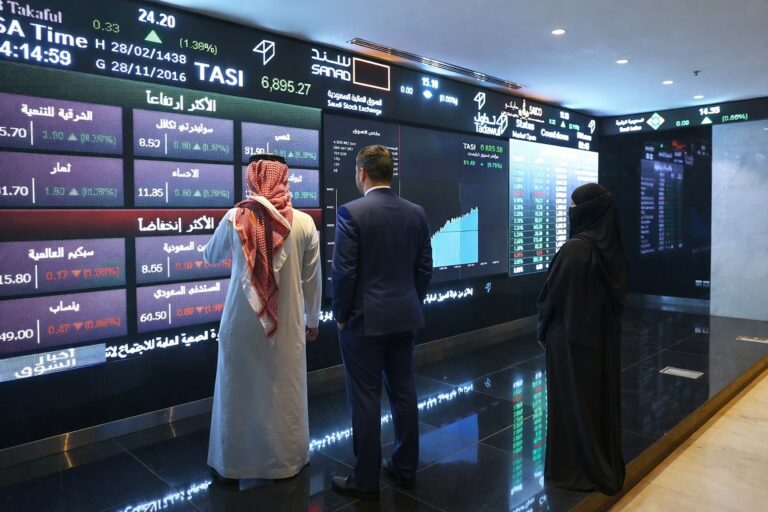
Saudi Arabia’s Capital Market Authority (CMA) announced on 6 January 2026 that its capital market will be opened to all categories of foreign investors for direct participation from 1 February 2026, in a landmark regulatory shift aimed at enhancing global investment flows and market liquidity.
The CMA’s decision marks a significant step in the kingdom’s phased strategy to liberalize its financial markets and attract broader international capital.
Previously, foreign investors could enter the Saudi Main Market only under a Qualified Foreign Investor (QFI) framework or through indirect mechanisms. The regulatory overhaul removes these hurdles, streamlining access for investors worldwide.
Under the approved amendments, non-resident foreign investors will be allowed to invest directly in the Saudi capital market without meeting qualification requirements that previously limited their participation.
This includes eliminating the QFI regime and abolishing regulatory frameworks for swap agreements, which had been used to give non-resident investors economic exposure to securities without direct ownership.
The CMA stated that the reforms are designed to expand and diversify the investor base, support investment inflows and enhance market liquidity across all market segments, including the Main Market.
The authority’s phased liberalization follows earlier regulatory adjustments in 2025 aimed at simplifying account opening and investment procedures for various investor categories, including foreign nationals residing in Gulf Cooperation Council (GCC) countries and those with prior residency in the region.
These interim steps were intended to build confidence ahead of full market opening.
Data published by the CMA underscores the growing presence of international capital in the Saudi market.
By the end of the third quarter of 2025, international investor ownership exceeded SAR 590 billion ($157.3 billion) across all market segments, with approximately SAR 519 billion invested in the Main Market.
Both figures represent an increase from foreign holdings reported at the end of 2024, when total ownership stood at around SAR 498 billion.
The CMA’s reforms are closely aligned with Saudi Arabia’s Vision 2030 economic blueprint, which prioritizes diversification away from oil dependency by deepening financial markets and attracting foreign capital.
The Full Market Opening builds on a series of consultative and legislative actions undertaken by the CMA.
In October 2025, the authority published a draft regulatory framework inviting public feedback on direct investment by non-resident foreign investors, a move widely seen as setting the stage for the current policy shift.
Financial markets in the Gulf have been responding positively to the news. Following earlier announcements about foreign investor access, Saudi stock indices have shown increased volatility and periodic gains, reflecting heightened investor interest in potential inflows once the market opens fully.
Regional markets, including Dubai and Abu Dhabi, have also registered mixed movements tied to broader sentiment around Gulf financial liberalization.
Despite this progress, some regulatory limits remain. For example, existing rules still impose caps on foreign ownership stakes in individual listed companies, which may influence investment decisions by larger institutional investors.
However, these constraints are part of ongoing regulatory discussions and could be subject to future revision.
For global investment firms and asset managers, the regulatory changes offer new avenues to access one of the Middle East’s most significant equity markets without the procedural barriers of past frameworks.
This could lead to increased participation from pension funds, sovereign wealth funds, and institutional investors seeking diversified exposure.
Domestic and regional investors are also expected to benefit from increased liquidity and enhanced market depth. Greater foreign participation may contribute to tighter bid-ask spreads, heavier trading volumes and improved price discovery, factors that enhance overall market efficiency.
Do you have any story or press releases you want to share? Send tips to editor@envestreetfinancial.com
Follow us on Twitter, Facebook, or LinkedIn to ensure you don’t miss out on any