
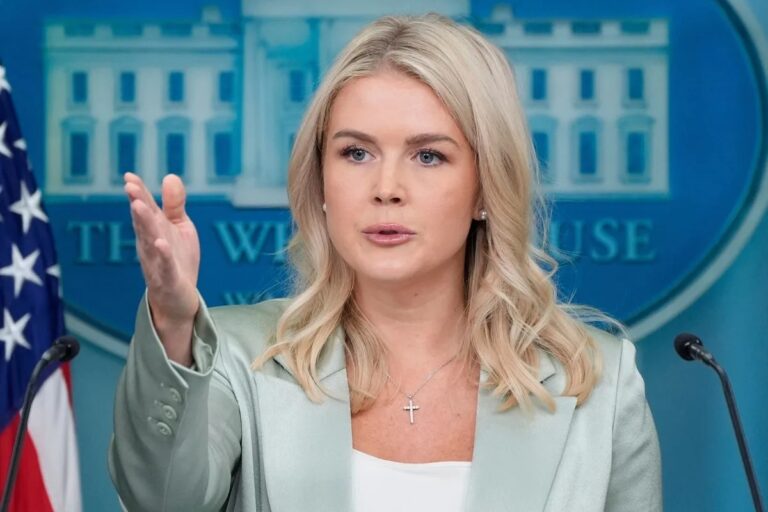
The White House has intensified its criticism of what it describes as the misuse of America’s humanitarian and social support systems, highlighting a sweeping federal investigation into a Minnesota fraud scheme that officials say diverted nearly $1bn (£800m) meant for vulnerable children.
White House Press Secretary Karoline Leavitt accused groups of exploiting refugee protections and pandemic-era support programmes, arguing that the U.S. must strengthen safeguards to prevent similar abuses.
Her remarks referred to a widely publicized federal case in Minnesota in which 86 individuals were charged with orchestrating what prosecutors called one of the largest pandemic-era fraud schemes in the country. According to the Department of Justice, 78 of those charged originate from Somali immigrant communities in the state, an observation Leavitt used to argue for stricter vetting and oversight of refugee pathways.
“In one scheme, and this is egregious, a nonprofit and its affiliates with these Somali migrants claim to have fed tens of thousands of American children during the pandemic. They were reimbursed for those meals by taxpayers. However, federal prosecutors found that almost all of those meals were never even delivered to hungry children,” Press Secretary Karoline Leavitt said
Federal prosecutors say that 59 people have already been convicted for their roles in the Minnesota fraud scheme, which centered on claims that tens of thousands of children were being fed daily meals through a network of nonprofits and community partners. Under a pandemic-era provision, the U.S. government reimbursed organizations for meals provided to children at risk of hunger when schools and childcare facilities were closed.
Court filings indicate that one nonprofit, along with its affiliated partners, submitted invoices for vast quantities of food that were never delivered. In some instances, the organizations claimed to have catered for more children than lived in the surrounding neighborhoods. Prosecutors said the alleged scheme siphoned taxpayer funds into real estate purchases, luxury cars, international travel, and properties in Turkey and Kenya.
“The facts are egregious,” Leavitt noted, adding that the Minnesota fraud scheme “does not reflect the character or integrity of the United States’ humanitarian values.” She insisted the US administration would not tolerate misuse of taxpayer-funded programmes, particularly those designed to help children and families facing food insecurity during the pandemic.
“I’ll tell you what does not add to our nation’s character and integrity is refugees who come here under the alleged plight of asylum and fleeing persecution and then come to the United States to abuse our system and rip off American taxpayers,” she said.
Another segment of the alleged fraud involved hundreds of organizations claiming reimbursement for services intended to support people at risk of homelessness. Investigators found that these services were also not provided, further widening what federal agencies described as a pattern of systemic exploitation of pandemic programmes.
Leavitt’s comments came amid ongoing political debate in the U.S. over immigration, asylum processing, and the enforcement of federal benefit programmes. Critics accuse the administration of using isolated cases to cast broader suspicion on immigrant communities, while supporters argue that large-scale fraud warrants stronger action and transparency.
The Minnesota case has already sparked nationwide scrutiny of pandemic-era reimbursement programmes, with some lawmakers calling for structural reform to prevent future abuses. Advocacy groups warn that failing to distinguish criminal conduct from legitimate refugee contributions risks stigmatizing entire communities.
Leavitt defended the administration’s stance, saying the issue was not about nationality but about protecting public resources from exploitation. “They are abusing our system,” she said. “They are draining resources that should be going to law-abiding, taxpayer-funded, taxpaying Americans.”
Officials emphasize that the money lost could have funded genuine programmes serving children who faced heightened vulnerability during the COVID-19 pandemic. Government watchdogs say the unprecedented scale and speed of relief programmes created opportunities for manipulation, something they argue must be addressed through long-term reforms.
The Minnesota fraud scheme has underscored the challenge of balancing swift humanitarian response with financial accountability. As these cases proceed through the courts, federal agencies are examining whether to implement new auditing mechanisms, digital verification tools, or stricter nonprofit accreditation standards.
While critics say the White House risks politicizing a complex criminal case, administration officials maintain that public awareness is essential to restoring trust in federal systems. “Taxpayer dollars must be protected,” Leavitt said. “We cannot allow programmes designed for the most vulnerable to become vehicles for enrichment by fraudulent actors.”
Do you have any story or press releases you want to share? Send tips to editor@envestreetfinancial.com
Follow us on Twitter, Facebook, or LinkedIn to ensure you don’t miss out on any